

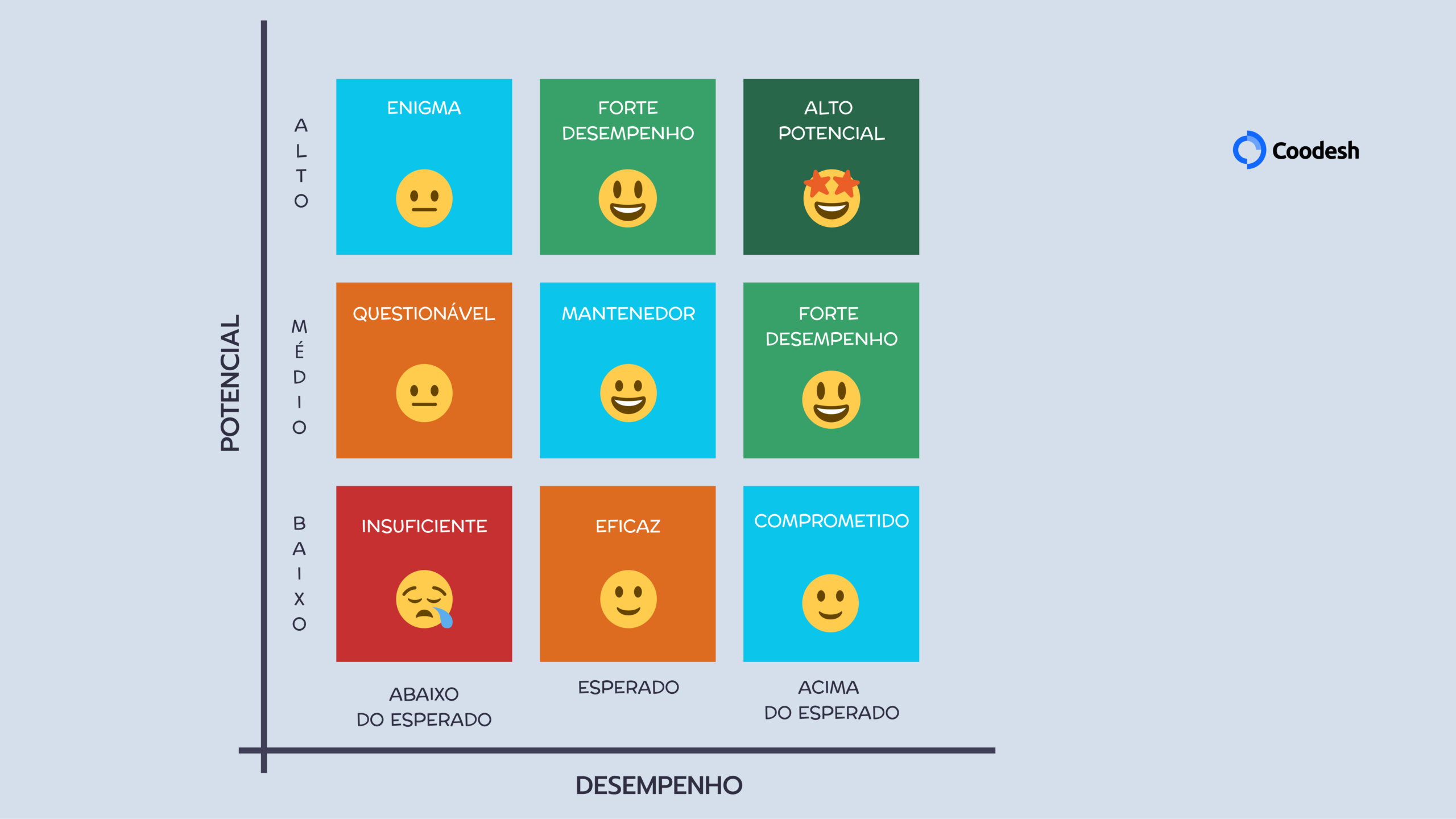
The 9-box grid is one of the most widely used talent management tools. It plots each employee’s performance against their potential to guide decisions on promotion, succession, training, and development. If you know the grid but are not sure how to use it well, this guide is for you.
People are a core pillar of any organization. To raise team performance, you need to know your talent well and decide what to do with each person.
What is the 9-box grid?
The 9-box grid is a talent review method built on two variables: performance and potential. It draws on the GE-McKinsey matrix from the 1970s, which was designed to evaluate business units, and was later adapted for talent management. It is still popular because it is simple and visual.
How the 9-box grid works
You can run the review in different ways: 90-degree (the manager rates direct reports), 180-degree (the manager rates and is rated by the team), or 360-degree (peers and other teams weigh in too).
Picture a grid with three rows and three columns:
- Horizontal axis: performance (low, meets expectations, exceeds expectations).
- Vertical axis: potential (low, moderate, high).
You can build it in talent management software or a spreadsheet. What matters is plotting each person. A developer might show high potential but below-target results: the manager needs to understand why and build a plan to close the gap. Someone with high potential and above-target results is probably ready for a promotion or to lead a team.
The 9-box grid takes time and discipline, but it helps you build stronger teams and develop and engage your people.
Put data behind the potential axis
Potential is usually the most subjective axis. With Coodesh Skills Intelligence, you assess technical and behavioral skills and bring real evidence to calibration. Map skills for free.
What to do with each box in the 9-box grid
- High potential, high performance: prepare for promotion and succession with new challenges and visibility.
- High potential, meets expectations: give bigger challenges and mentoring to accelerate growth.
- High potential, low performance: find out what blocks results, such as the wrong role or unclear expectations, and adjust fast.
- Moderate potential, high performance: recognize and retain; they can grow deeper in the current role.
- Moderate potential, meets expectations: the core of the team; keep development steady.
- Moderate potential, low performance: an improvement plan with clear goals and follow-up.
- Low potential, high performance: a valuable specialist in their role; recognize them without forcing a promotion.
- Low potential, meets expectations: keep them in role with clear objectives.
- Low potential, low performance: a candid conversation, a time-bound action plan, and a review of fit if nothing changes.
The labels are a starting point for a conversation, not a verdict. Revisit placements after each review cycle, because potential and performance both change over time.
Promotion and succession
High performers with high potential will leave if they see no room to grow. That is why the grid needs regular review, not a once-every-few-years exercise.
The higher the role, the more it demands. Every promotion also opens another seat, so if you use the 9-box grid, plan succession too. The person moving into the open role needs a clear read on their own potential and performance, or the change can hurt both the team and them.
How the grid affects employees
Each company decides whether to share results. If your culture values transparency, people should know where they stand and what is expected. Avoid labeling anyone by their box, especially people in the lower ones.
A feedback culture is essential. If someone is underperforming, a one-on-one helps align expectations and set next steps.
What the 9-box grid is good for
- Building and identifying leaders.
- Hiring with more clarity about the profiles your team lacks.
- Promoting with less bias.
- Retaining talent and reducing turnover.
- Spotting who needs more attention.
- Planning a training calendar.
- Informing compensation and benefits decisions.
Common 9-box grid mistakes
- Confusing performance with potential: doing well in the current role does not guarantee success in a bigger one.
- Rating potential on opinion alone: without evidence, the grid reflects manager perception more than reality.
- Skipping calibration: without a calibration session across managers, every team uses a different yardstick.
- Not acting on it: a grid without development plans is just a diagnosis.
Related reading
- Skills Mapping: The Complete Guide for Companies
- DISC Assessment: What It Is, the Profiles, and How to Use It in HR
- Skills-Based Hiring: Beyond the Resume
- Coodesh Skills Intelligence: skills mapping, career paths, and succession
Conclusion
The 9-box grid touches the whole talent cycle, including hiring: once you know your team, it is easier to know who to bring in. Prepare HR for a review that shows strengths and gaps objectively, and use the results to decide on training, promotions, and succession.
Bring evidence to your next calibration
Coodesh Skills Intelligence measures skills with real assessments, shows gaps by person and team, and helps you plan careers and succession.
Map your team’s skills for free
Large company or custom needs? Book a demo with our team.